
Search for AI Tools

Describe the job you need to automate with AI.

Best AI Tools for Ml Pipeline Orchestration Platforms

Discover the Best AI Tools for ML Pipeline Orchestration Platforms that streamline your machine learning workflows. Our curated list features top-rated tools designed to help you manage, automate, and optimize your ML processes effectively.

Top 10 in Ml Pipeline Orchestration Platforms
How we choose
  • Evaluate the user interface and ease of use.
  • Consider the scalability and integration options with other tools.
  • Look for community support and documentation availability.
  • Assess pricing models and overall value for your needs.
  • Check for features like monitoring, logging, and version control.
Databricks Workflows homepage

Databricks Workflows

4.7
(32) Paid

Databricks Workflows is a powerful tool for orchestrating data pipelines. It enables seamless integration of machine learning workflows and data operations.

Key features

  • Subscription-based pricing with various plans.
  • Intuitive interface for workflow management.
  • Integrated with Databricks ecosystem.
  • Supports ML pipeline orchestration.
  • Collaborative features for team workflows.

Pros

  • High user rating (4.7 from 32 reviews).
  • Flexible pricing tailored to different needs.
  • Streamlines complex data operations.
  • Robust integration with other Databricks tools.

Cons

  • Pricing may be high for small teams.
  • Limited features in lower-tier plans.
  • Learning curve for new users.
Airflow ML homepage

Airflow ML

4.7
(31) Free

Airflow ML simplifies the management of machine learning workflows. It allows users to automate and scale their ML processes effectively.

Key features

  • Open-source with no direct costs.
  • Supports complex ML workflows.
  • Integrates with various data sources.
  • Flexible scheduling options.
  • Extensible through plugins.

Pros

  • Cost-effective with free usage.
  • Strong community support.
  • Robust scheduling capabilities.
  • Highly customizable for specific needs.

Cons

  • Requires technical expertise to set up.
  • Limited built-in monitoring tools.
  • Can become complex for large projects.
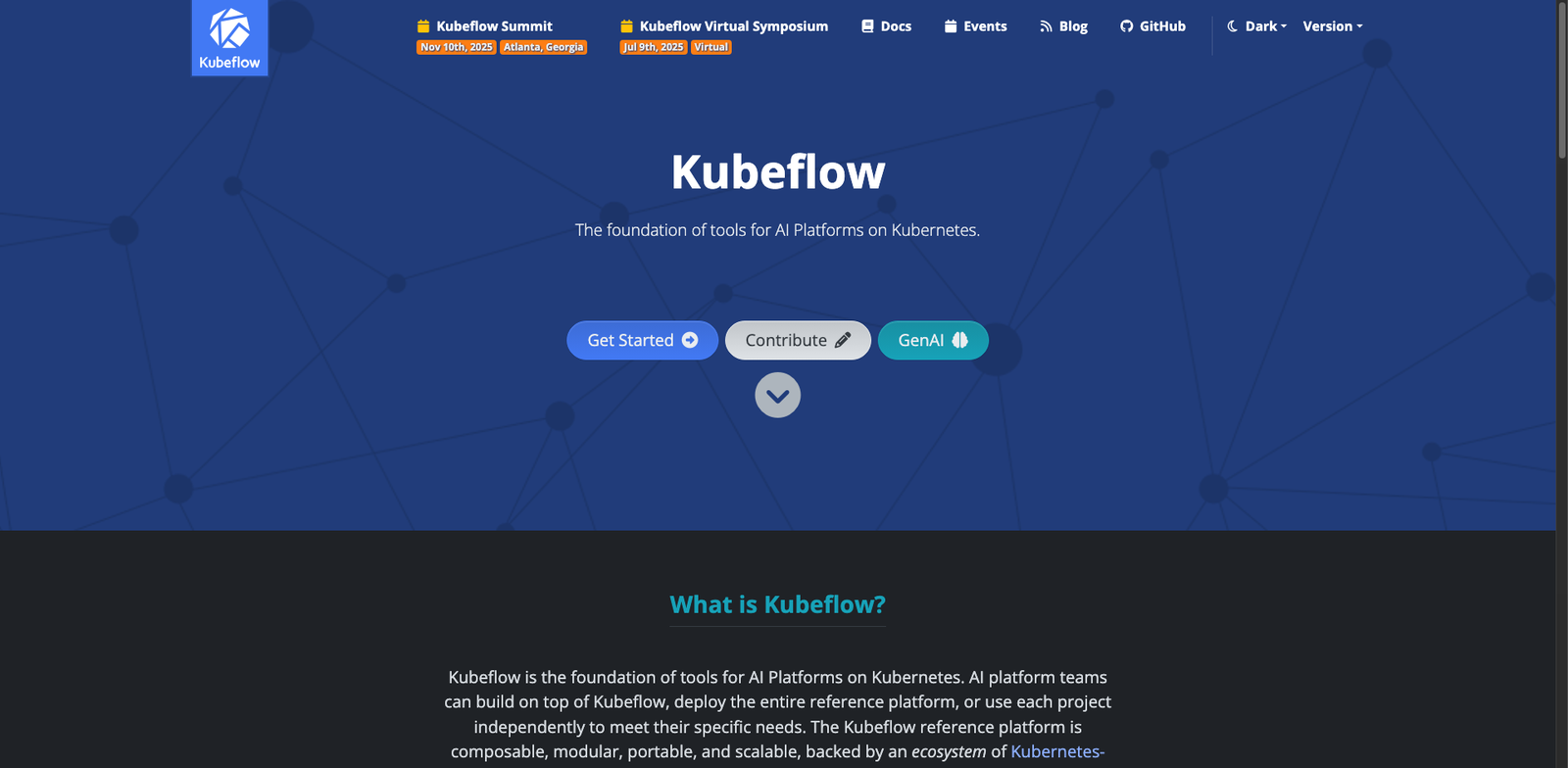
Kubeflow homepage

Kubeflow

4.6
(30) Free

Kubeflow is an open-source platform that simplifies deploying machine learning workflows on Kubernetes. It allows users to build, train, and deploy ML models efficiently.

Key features

  • Supports multiple ML frameworks like TensorFlow and PyTorch.
  • Integrates seamlessly with Kubernetes for scalability.
  • User-friendly UI for managing ML workflows.
  • Facilitates easy model deployment and serving.
  • Offers robust support for hyperparameter tuning.

Pros

  • Free and open-source with a strong community.
  • Highly scalable due to Kubernetes integration.
  • Flexible and supports diverse ML frameworks.
  • Rich ecosystem of tools for ML lifecycle management.

Cons

  • Initial setup can be complex for beginners.
  • Limited out-of-the-box features compared to paid solutions.
  • Documentation can be overwhelming for new users.
SageMaker Pipelines homepage

SageMaker Pipelines

4.6
(28) Paid

SageMaker Pipelines is a powerful tool for orchestrating machine learning workflows. It offers a usage-based pricing model, allowing you to pay only for the resources you use during execution.

Key features

  • Seamless integration with AWS services
  • Automated ML model deployment
  • Easy versioning of data and models
  • Visual interface for pipeline design
  • Built-in monitoring and logging

Pros

  • Flexible pricing based on actual usage
  • Scalable for large data processing
  • Supports collaboration across teams
  • Robust security features

Cons

  • Can become costly with heavy usage
  • Steeper learning curve for beginners
  • Limited customization options for advanced users
Azure ML Pipelines homepage

Azure ML Pipelines

4.6
(30) Paid

Azure ML Pipelines is a cloud-based service that automates machine learning workflows. It helps you build, train, and deploy models efficiently.

Key features

  • Pay-as-you-go pricing with various tiers.
  • Robust orchestration for ML tasks.
  • Integration with Azure services and tools.
  • Scalable compute resources.
  • User-friendly interface for managing pipelines.

Pros

  • Flexible pricing adapts to usage.
  • Strong integration with Azure ecosystem.
  • High scalability for large data sets.
  • User-friendly for data scientists and developers.

Cons

  • Costs can add up with heavy usage.
  • Learning curve for new users unfamiliar with Azure.
  • Limited advanced features compared to specialized ML platforms.
Weights & Biases Launch homepage

Weights & Biases Launch

4.6
(27) Paid

Weights & Biases helps teams manage their machine learning projects effectively. It provides tools for tracking experiments, visualizing results, and collaborating seamlessly.

Key features

  • Experiment tracking with visual dashboards.
  • Collaboration tools for team-based projects.
  • Integration with popular ML frameworks.
  • Version control for datasets and models.
  • Real-time performance monitoring.

Pros

  • User-friendly interface for easy navigation.
  • Robust collaboration features enhance teamwork.
  • Strong integration with existing ML tools.
  • Accurate tracking of experiments improves results.

Cons

  • Free tier has limited features, may not suffice for larger projects.
  • Pricing can escalate quickly for advanced features.
  • Some users report a steep learning curve.
Prefect homepage

Prefect

4.6
(31) Paid

Prefect helps teams build, manage, and monitor data pipelines effectively. It simplifies the orchestration of complex workflows with a flexible framework.

Key features

  • Free tier available for small projects
  • Pro version starting at $49/month
  • Integration with popular data tools
  • User-friendly interface for workflow visualization
  • Real-time monitoring and alerting

Pros

  • Highly customizable workflows
  • Strong community support
  • Robust monitoring features
  • Scalable for various project sizes

Cons

  • Paid plans can be expensive for large teams
  • Some advanced features require higher-tier plans
  • Learning curve for new users
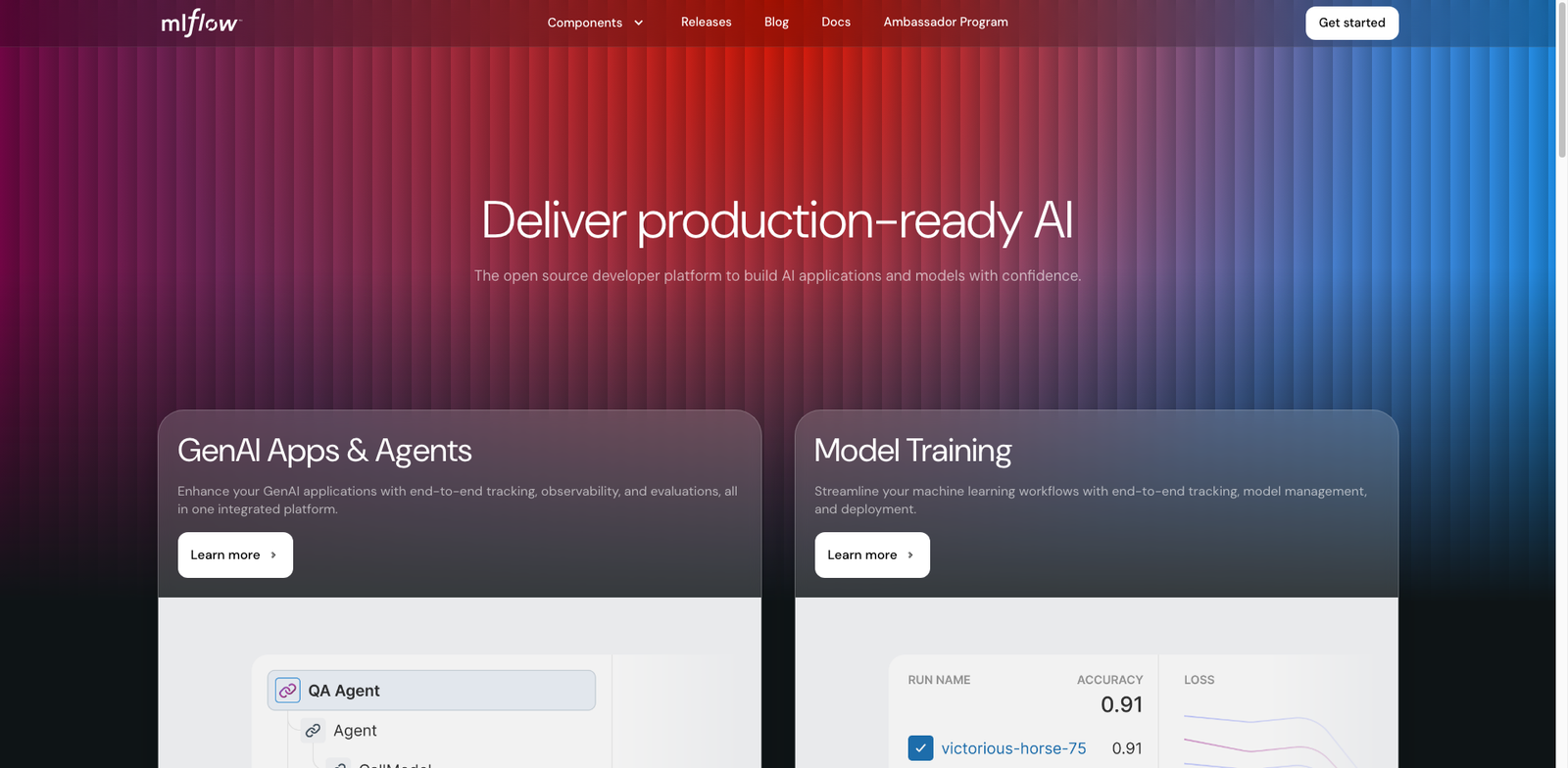
MLflow Pipelines homepage

MLflow Pipelines

4.6
(30) Free

MLflow Pipelines is a component of the open-source MLflow platform. It streamlines the process of building, deploying, and managing ML models.

Key features

  • Supports end-to-end machine learning workflows
  • Integrates seamlessly with existing ML operations
  • Customizable pipeline templates
  • Version control for models and data
  • User-friendly interface for monitoring and managing pipelines

Pros

  • Open-source and free to use
  • Strong community support and documentation
  • Flexible integration with various ML libraries
  • High user satisfaction rating

Cons

  • Limited enterprise features without additional support
  • Steeper learning curve for beginners
  • May require manual setup for specific use cases
Vertex AI Pipelines homepage

Vertex AI Pipelines

4.5
(26) Paid

Vertex AI Pipelines is a tool designed for managing machine learning workflows. It allows developers to create, deploy, and manage pipelines efficiently.

Key features

  • Pay-as-you-go pricing model based on resource usage.
  • Integrates seamlessly with other Google Cloud services.
  • Supports versioning for reproducible experiments.
  • Automates complex pipeline orchestration.
  • Provides monitoring tools for performance tracking.

Pros

  • Flexible and scalable pricing.
  • Easy integration with existing Google Cloud infrastructure.
  • User-friendly interface for managing workflows.
  • Strong community support and documentation.

Cons

  • Costs can accumulate quickly with extensive usage.
  • Limited native support for non-Google Cloud services.
  • Steeper learning curve for beginners unfamiliar with ML orchestration.
ZenML homepage

ZenML

4.5
(29) Free

ZenML provides developers with a streamlined approach to managing machine learning workflows. It helps automate and standardize processes for better efficiency.

Key features

  • Free tier available for basic usage.
  • Supports multiple ML frameworks.
  • Integrates with popular data storage services.
  • Facilitates version control for ML experiments.
  • User-friendly interface for managing pipelines.

Pros

  • Easy to use, even for beginners.
  • Free tier allows for experimentation without commitment.
  • Strong community support and documentation.
  • Flexible integration with existing tools.

Cons

  • Limited features available in the free tier.
  • Pricing details are not clearly published.
  • Some advanced features require paid plans.

New in Ml Pipeline Orchestration Platforms

Recently added tools you might want to check out.

Developer / Data Ops

Pachyderm provides ML pipeline orchestration for developers and data teams, offering flexible pricing options, including enterprise solutions tailored to specific needs.

Developer / Data Ops

Valohai provides a subscription-based ML pipeline orchestration platform designed for developers and data operations teams, with tailored plans for diverse needs.

Developer / Data Ops

Supervise.ly provides ML pipeline orchestration platforms for developers and data ops, with plans starting at $99 per month for individual users.

Developer / Data Ops

Grid.ai provides subscription-based ML pipeline orchestration tools for developers and data ops teams, with plans tailored to various user needs.

Developer / Data Ops

Anyscale Ray provides various pricing options for developers and data operations teams, focusing on machine learning pipeline orchestration. Specific pricing details are not publicly available.
Developer / Data Ops

Weights & Biases provides ML pipeline orchestration for developers and data teams, offering a free tier and paid plans starting at $49 per user per month.

Developer / Data Ops

Databricks Workflows provides a subscription-based pricing model for organizations, enabling efficient orchestration of ML pipelines and data operations.

Developer / Data Ops

Azure ML Pipelines provides a flexible pay-as-you-go pricing model for developers and data operations teams, optimizing machine learning workflow orchestration.

Developer / Data Ops

SageMaker Pipelines provides a usage-based pricing model for orchestrating machine learning workflows, ideal for developers and data operations teams.

Compare these leading platforms to find the right fit for your ML pipeline orchestration needs and enhance your project efficiency.